When you shop for CBD, a USDA Organic seal can look like a useful shortcut: cleaner hemp, fewer unwanted chemicals, and a product that has passed an independent check. But the seal does not tell you everything you need to know about what is in the bottle—or whether the product is worth a higher price.
The practical answer: USDA organic CBD may be worth paying extra for if verified organic farming and handling matter to you. It is not, by itself, proof that a CBD product contains the amount of cannabidiol listed on its label, has no THC, or will meet your needs. For those questions, look at the product’s batch-specific certificate of analysis, or COA, and the company’s testing and refinement details.
One important limitation for shoppers: the article this question refers to did not list product prices. Without prices, it is not possible to compare the actual cost of organic and non-organic products or calculate a specific premium. You can still use the checklist below to make a sound comparison when prices are available.
What USDA Organic Means for CBD
USDA Organic is a regulated certification, not just a phrase a brand can put on a label because it uses natural ingredients. For hemp to be certified organic, the farm must follow USDA National Organic Program rules, including requirements for how crops are grown and how prohibited substances are managed. Certification also involves inspections and records.
For a CBD product to carry an organic claim, more than the hemp crop may matter. Processing, ingredients, and handling can affect what claims are allowed. Check the package and the certifier’s details rather than assuming that “made with organic hemp” means the finished product itself is USDA certified organic. If a product displays the USDA Organic seal, look for the name of its certifying agent and confirm the certification when possible.
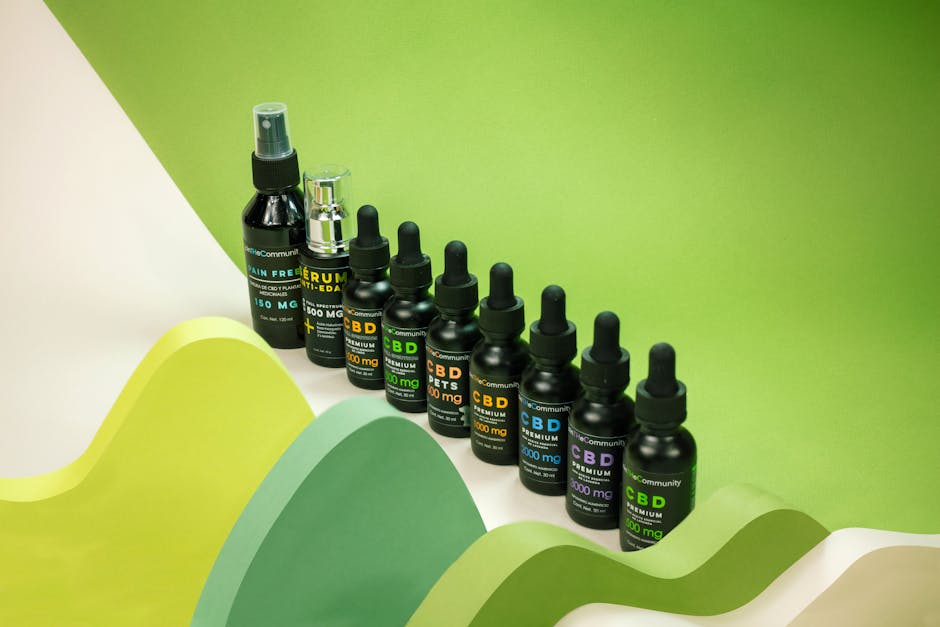
Organic certification mainly speaks to agricultural and handling standards. It does not establish that a product treats a health condition, is more effective than another CBD product, or is free of every possible contaminant. Those are separate questions—and some require separate testing.
Why Hemp Sourcing Matters
CBD begins with hemp, and growing conditions can affect the starting material. Hemp can take up substances from the soil, so responsible hemp sourcing includes knowing where the crop was grown and how it was cultivated. Organic certification can provide a more formal check on certain farming practices than a general claim such as “clean-grown” or “natural.”

Still, certification is only one part of the sourcing picture. Ask whether the brand identifies the farm or growing region, explains how it verifies its suppliers, and provides testing for the finished batch. A carefully sourced crop does not automatically guarantee a clean final product: extraction, refinement, storage, and packaging all matter too.
Full-Spectrum, Broad-Spectrum, and Isolate
These terms describe the kinds of hemp compounds included in a CBD product. They are not USDA Organic categories, and they do not tell you whether a product is potent or safe.
Type What it generally contains What to check Full-spectrum CBD and other hemp compounds, including some THC, within applicable legal limits How much THC the batch report shows; “full-spectrum” does not mean THC-free Broad-spectrum CBD and some other hemp compounds, with THC reduced or intended to be removed Whether the batch-specific COA actually detects THC CBD isolate CBD separated from most other hemp compounds CBD potency and whether the COA tests for THC and contaminantsBrands sometimes connect full-spectrum products to the “entourage effect.” In plain English, the entourage effect is the idea that hemp compounds may influence one another when present together, rather than CBD acting entirely on its own. It is a proposed explanation, not a guarantee of stronger effects, and it does not establish that a particular blend is better for you.
THC-Free Claims and Drug Testing
Some consumers want CBD without THC because of workplace drug testing, personal preference, or concern about intoxicating effects. Read “THC-free” cautiously. The phrase may reflect the company’s formulation or its testing threshold; it does not necessarily mean that no THC could be detected by every method.
Even products labeled broad-spectrum or THC-free may carry some risk of trace THC, depending on the product and how it was made and tested. A CBD product can also be mislabeled or contaminated. Drug tests commonly look for THC-related compounds, and using CBD does not protect you from a positive result. If a positive test could affect your job, Click for more a legal matter, or another important decision, the lowest-risk choice is to avoid CBD products that may contain THC—and to discuss your situation with a qualified professional.
Do not rely on a front-label claim alone. Look for a batch-specific COA that reports THC results and the lab’s detection or quantification limits. A report showing “not detected” means the compound was below that lab’s stated detection limit; it is not the same as proof that absolutely no molecule is present.
How to Read a Batch-Specific COA
A certificate of analysis is a laboratory report showing test results for a product sample. “Batch-specific” means the report is tied to the particular production batch you are buying, usually through a matching lot or batch number. A generic report—or a COA for a different batch—is much less useful.
Use this checklist when reviewing a report:
- Match the batch: Compare the lot number on the package with the one on the COA. Check the sample or test date, too. Confirm cannabinoid amounts: The report should show CBD and, where relevant, THC results. Compare the results with the product’s label and serving size. Check THC reporting: Look for a numerical result or a clear “not detected” result and the lab’s reporting limit—not just a brand summary saying “THC-free.” Look for contaminant testing: Depending on the product, useful tests may cover pesticides, heavy metals, residual solvents, and microbial contaminants. A cannabinoid potency panel alone does not answer these questions. Identify the lab: Find the laboratory name and report details. Independent testing is more informative than a claim that testing occurred without the report. Check the product form: Make sure the report applies to the oil, gummy, capsule, or other finished product—not just raw hemp extract that may have been diluted or changed later.
A COA is not a government approval or a guarantee that a product is risk-free. It is a piece of evidence that helps you verify what was tested and what the lab found. If the company will not provide a current, matching report, treat that as a reason to keep shopping.
Lab Testing and Refinement: What to Ask
Testing and refinement are related but different. Testing checks a sample for specified compounds or contaminants. Refinement describes steps used to process the extract—for example, to remove unwanted material or separate certain cannabinoids. A brand should be able to explain both without leaning on vague claims like “triple purified.”
Ask the company:
- What type of extract is used, and how is the final product formulated? Which tests are performed on the finished batch, and which are performed only on raw material? Does the company test for residual solvents if solvents are used in extraction? How does it verify THC removal for products marketed as THC-free? Can it provide a current COA that matches the exact lot on the package?
Processing can affect a product’s final cannabinoid profile, so the hemp’s organic status does not replace a finished-product report. Conversely, a thorough COA does not prove that the hemp was grown organically. These checks answer different questions.
CBD’s Mainstream Arrival After the 2018 Farm Bill
The 2018 Farm Bill removed hemp—defined in federal law by its low delta-9 THC concentration—from the federal Controlled Substances Browse around this site Act’s definition of marijuana. That change helped hemp-derived products, including CBD, reach more stores and mainstream shoppers. It did not mean that every CBD product was approved by the Food and Drug Administration, or that all state rules disappeared.
The distinction still matters today: legal access and retail availability are not the same as FDA approval for a health claim. Be skeptical of products advertised as cures or treatments, and check current federal and state rules if you are unsure about a product’s legal status. CBD may also interact with medicines, so ask a clinician or pharmacist before using it—especially if you take prescription drugs or have a health condition.
Is the Organic Premium Worth It?
Because the referenced article lists no prices, there is no honest way to say how many dollars more organic CBD costs or whether one named product offers good value. Instead, compare products using the same unit and the same evidence. For oils, compare price per milligram of CBD; for gummies, compare price per serving and the amount of CBD in each serving. Then check whether the products have comparable cannabinoid profiles and testing.
Verify the organic claim. Look for the USDA Organic seal and certification details, or distinguish clearly between certified organic and “made with organic hemp.” Compare the ingredient lists. An organic hemp extract does not make every carrier oil, flavor, or other ingredient organic. Compare batch reports. Give more weight to a current, matching COA with potency and relevant contaminant testing than to broad marketing language. Choose a spectrum based on your priorities. If avoiding THC is important, do not assume broad-spectrum or isolate guarantees a negative drug test. Calculate the difference. Compare cost per milligram of CBD, then decide whether documented organic farming and handling are worth the added cost to you.Paying extra may make sense if organic certification is important to your shopping values and the company also provides transparent sourcing, credible batch testing, and clear product information. It may not be worth it if the only evidence is a green label or a premium price. A lower-priced product with a well-documented batch report may offer more useful transparency than a costly product with no accessible testing.
The Bottom Line
USDA organic CBD can offer a verifiable standard for hemp farming and certain handling practices. It cannot, on its own, confirm CBD strength, prove a product is THC-free, or establish that the product delivers a health benefit. For a practical purchase decision, consider the organic certification alongside hemp sourcing, the type of extract, lab testing, refinement details, and a batch-specific COA.
Since no product prices were provided, treat any claim that organic CBD is “worth the premium” as unproven until you compare actual products. Start with the paperwork, then decide whether the price difference fits your priorities.